



Because every breath matters
By the time you have read these words, you will have unconsciously performed a human survival technique several times — unaided. Millions cannot.
The ventilator crisis in low-resource settings
Just having access to more high-end ventilators will not solve the problem. The challenge is systemic.
Too Few Ventilators In Use
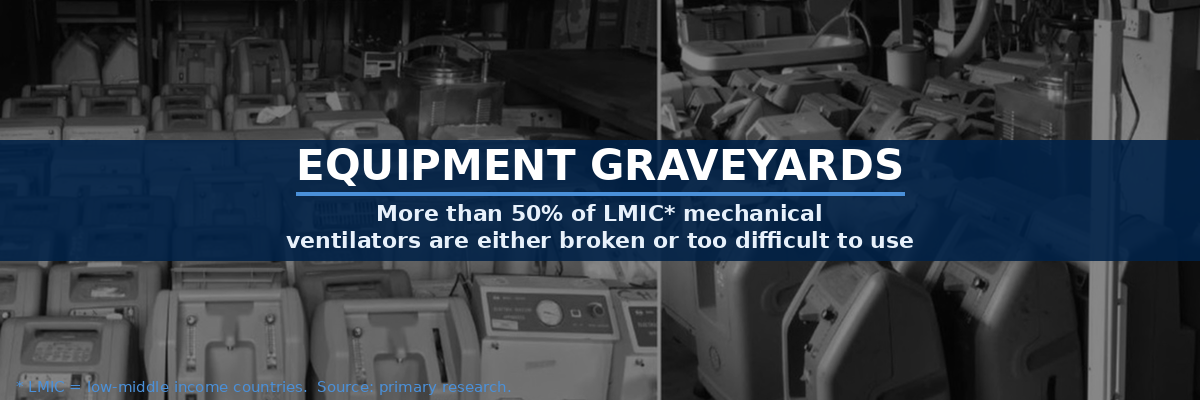
Over 50% of LMIC mechanical ventilators are broken or too complex to operate.
Prohibitive Total Cost
A standard ventilator costs $257,250 over 6 years in a LMIC setting.
Multi-Purpose Clinical Roles
Complex ventilators require specialist training most LMIC teams cannot sustain.
Unreliable Infrastructure
Power, medical air and oxygen are costly and frequently interrupted.
After COVID, don’t we have enough ventilators?
The assumption
After COVID, we donated thousands of ventilators to LMICs. Surely the problem is solved?
- Donated equipment often not operational
- Complex devices require specialist training
- Service contracts unaffordable or unavailable
The reality
Over 50% of LMIC mechanical ventilators are broken or too difficult to use. Donating more of the same does not solve the problem.
- Need affordable, repairable platforms
- Local manufacture and servicing is key
- Sustainable solutions, not one-time donations
OxVent-P — built for where it’s needed most
A sustainable ventilator platform to be used across clinical situations and locations.
What makes OxVent-P innovative
6-Year Cost Comparison
| Cost Category | Today — Standard | OxVent-P | Saving |
|---|---|---|---|
| Ventilator purchase | $20,000 | $10,000 | 50% |
| Training | $10,000 | $1,000 | 90% |
| Service contract (6yr) | $11,250 | $2,500 | 78% |
| O&sub2; cylinders (6yr) | $216,000 | $108,000 | 50% |
| TOTAL (6 years) | $257,250 | $121,500 | 53% |
Because every breath matters
Help us take OxVent-P from patented prototype to certified, deployable product in 6–8 months.